






Free Shipping within the US
.png?w=512&h=512)
3 Years Warranty for All Lamps
30-Day Return and Exchange Policy.

24/7 Around-the-clock After-sales Support
Free returns
Carbon neutral
Secure payments

Bulbs Included
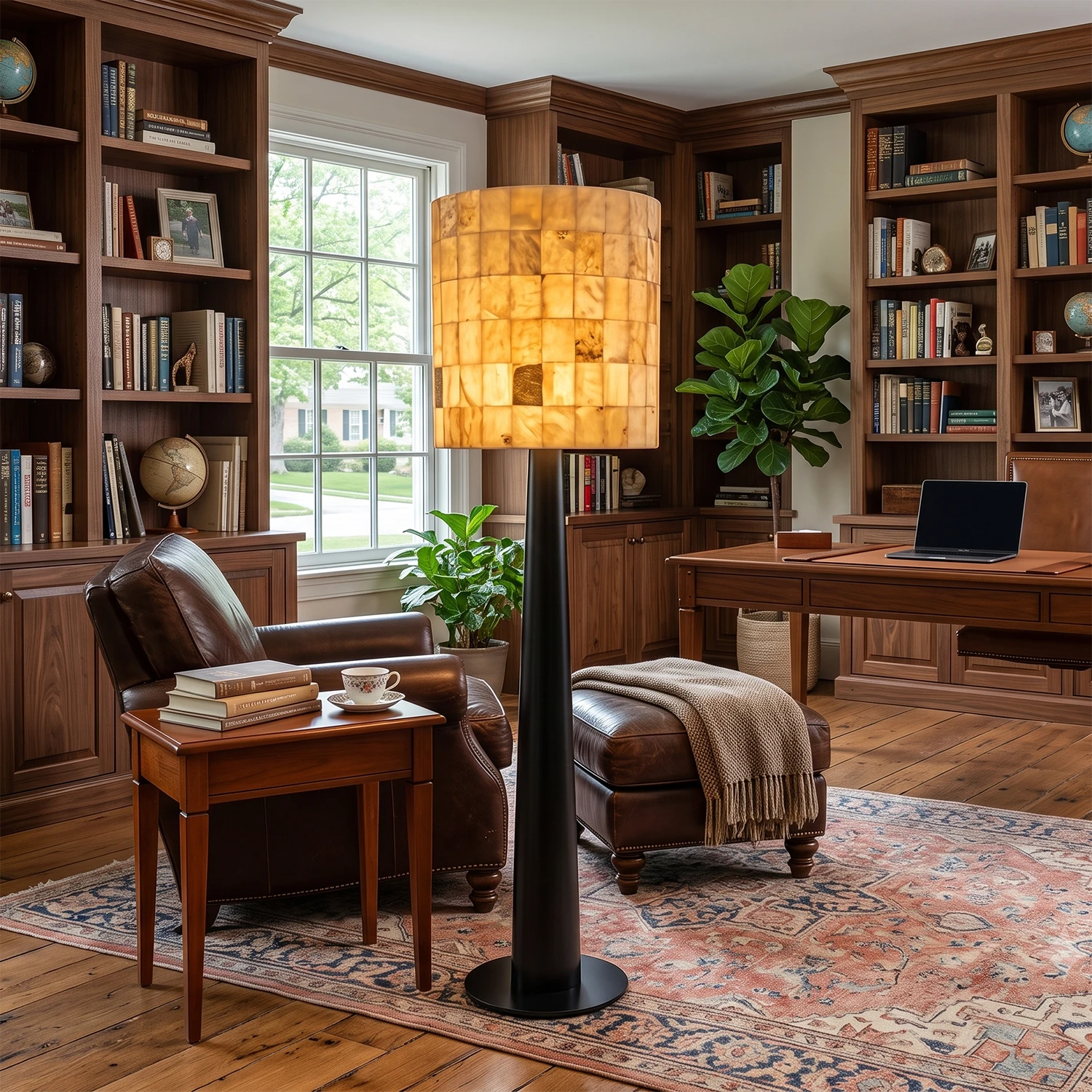
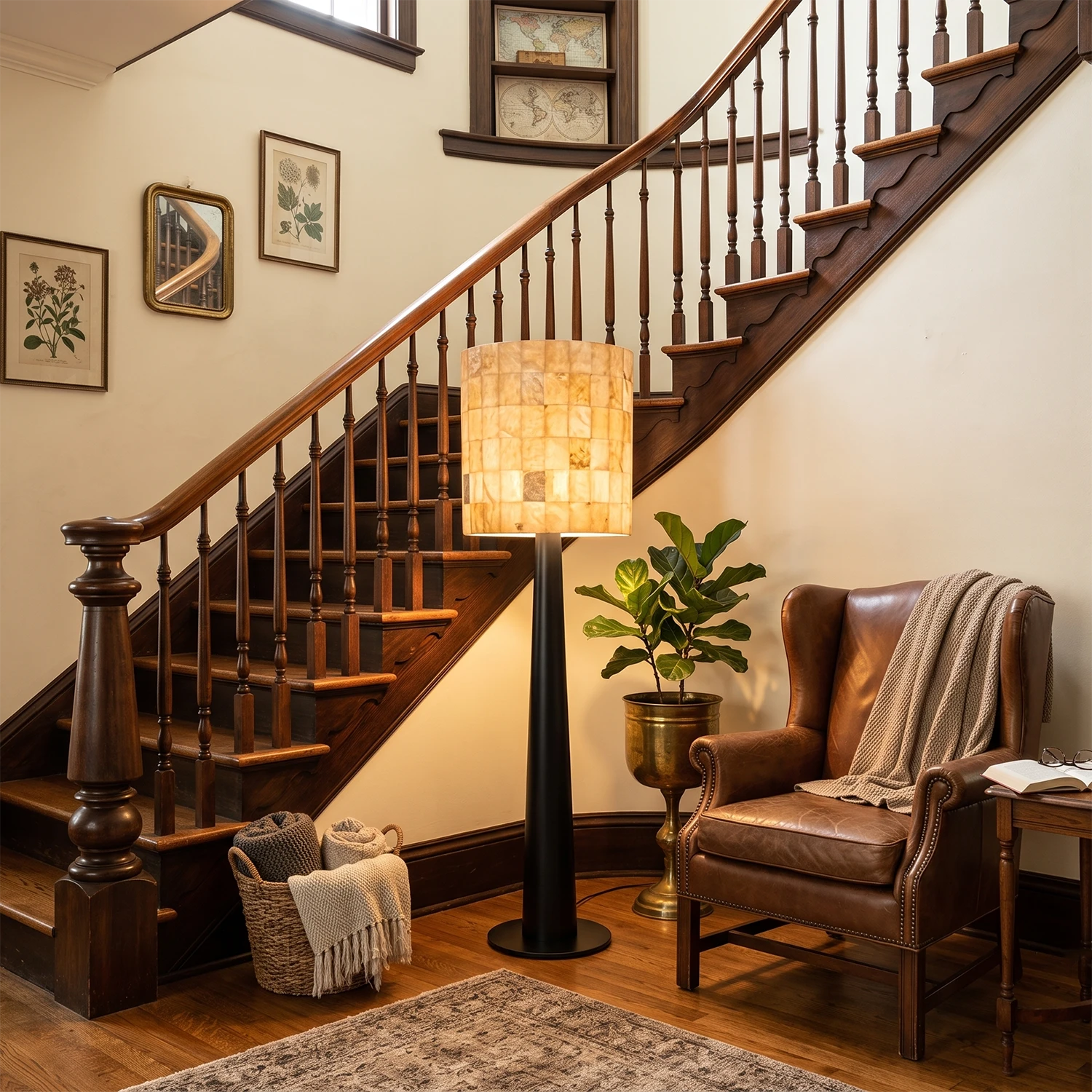
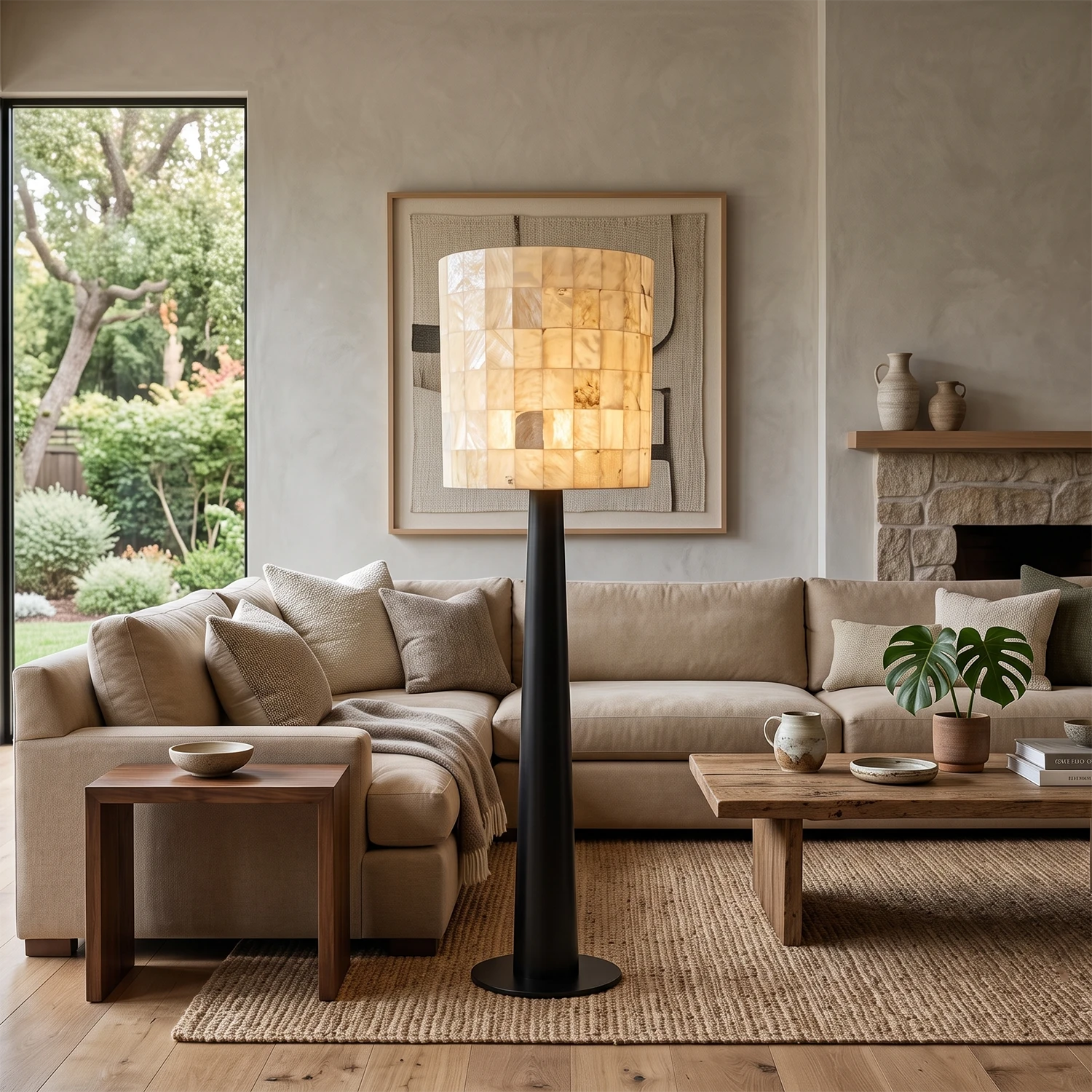
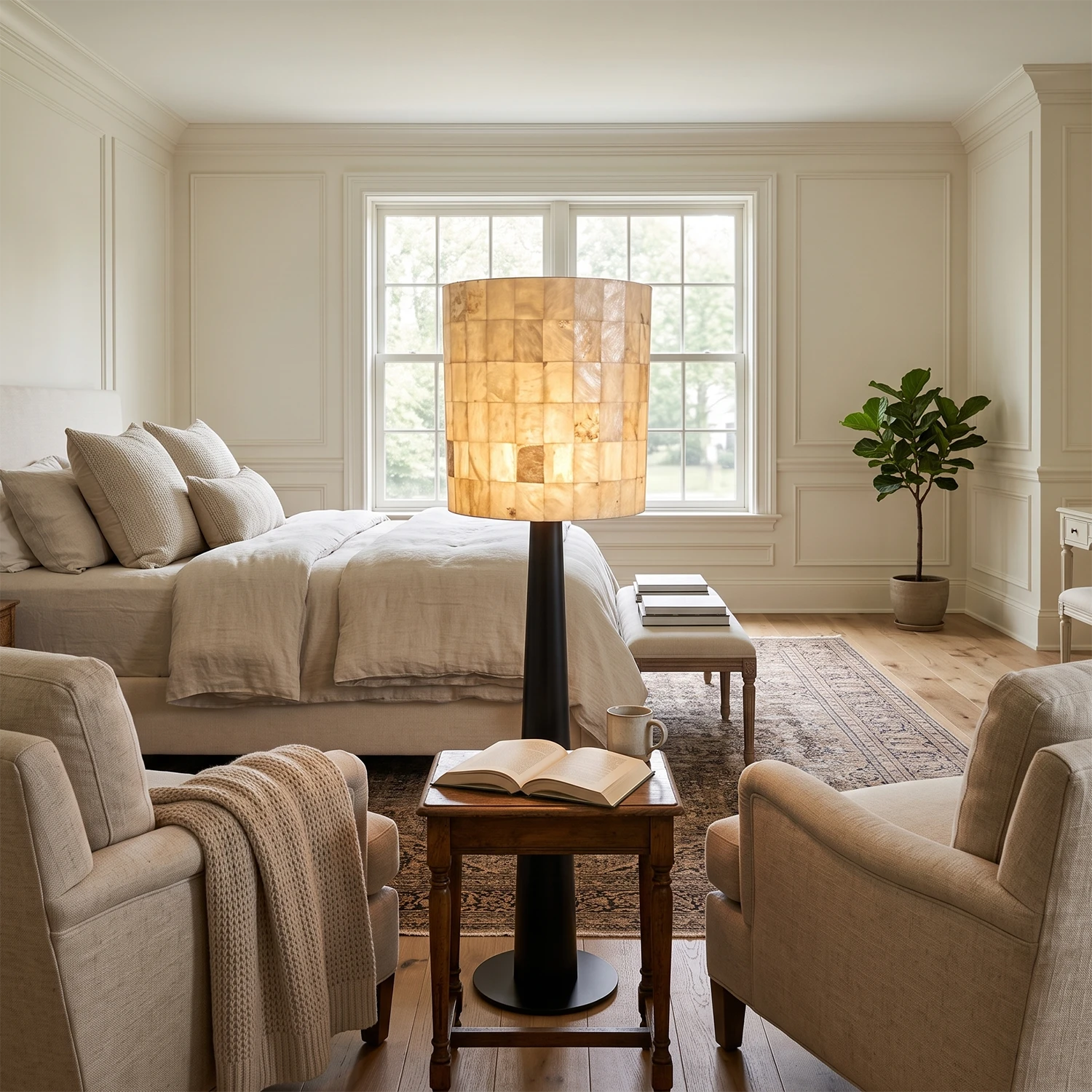
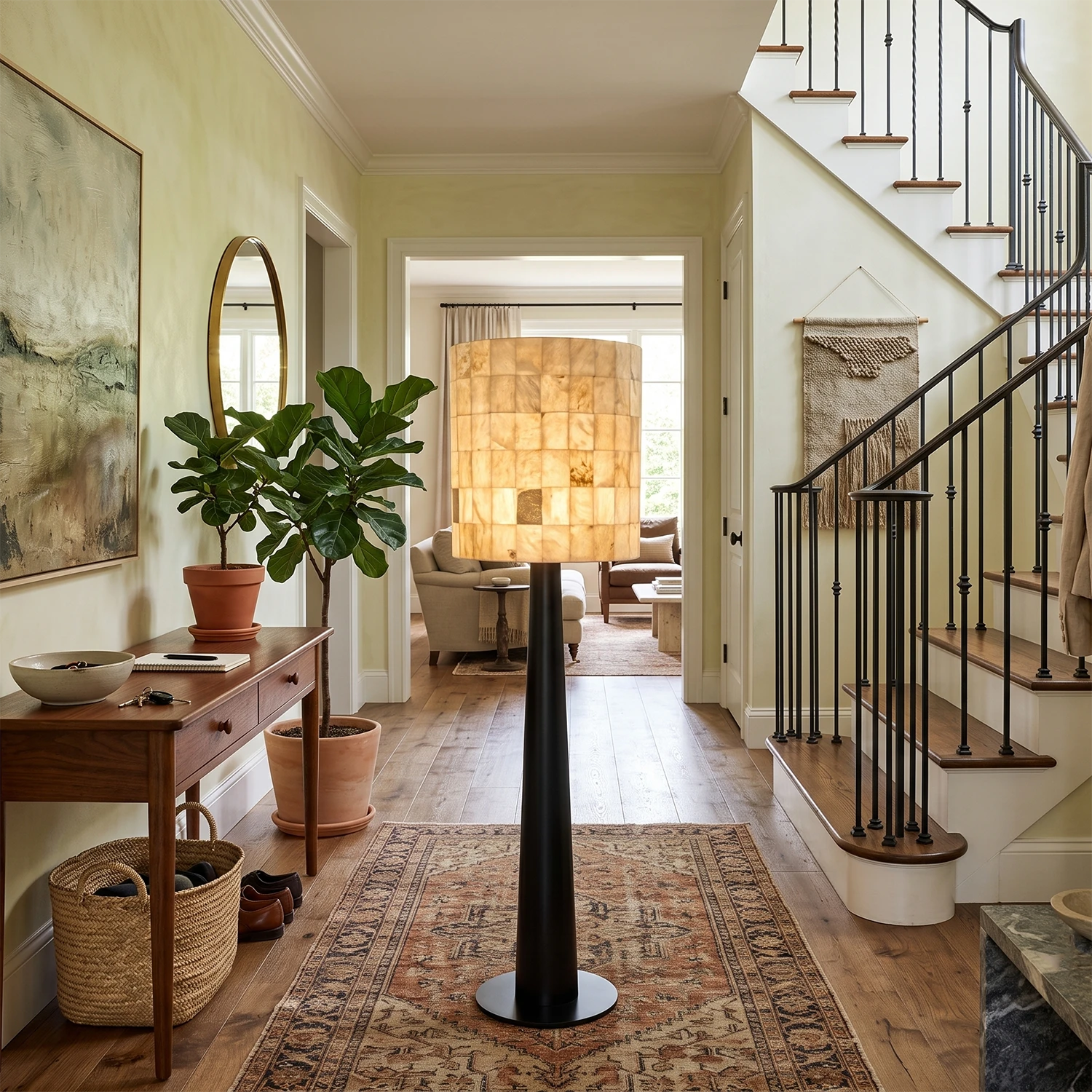
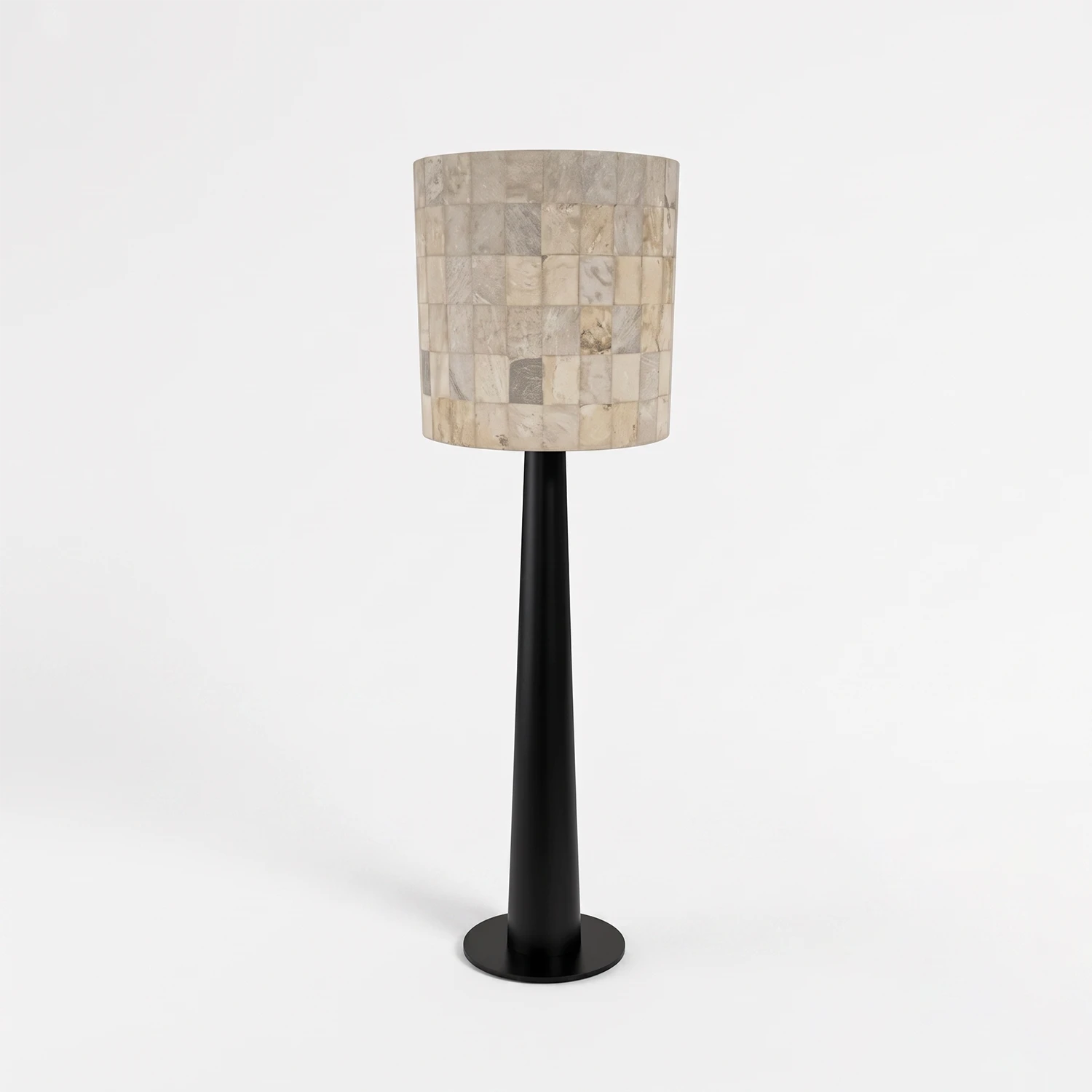
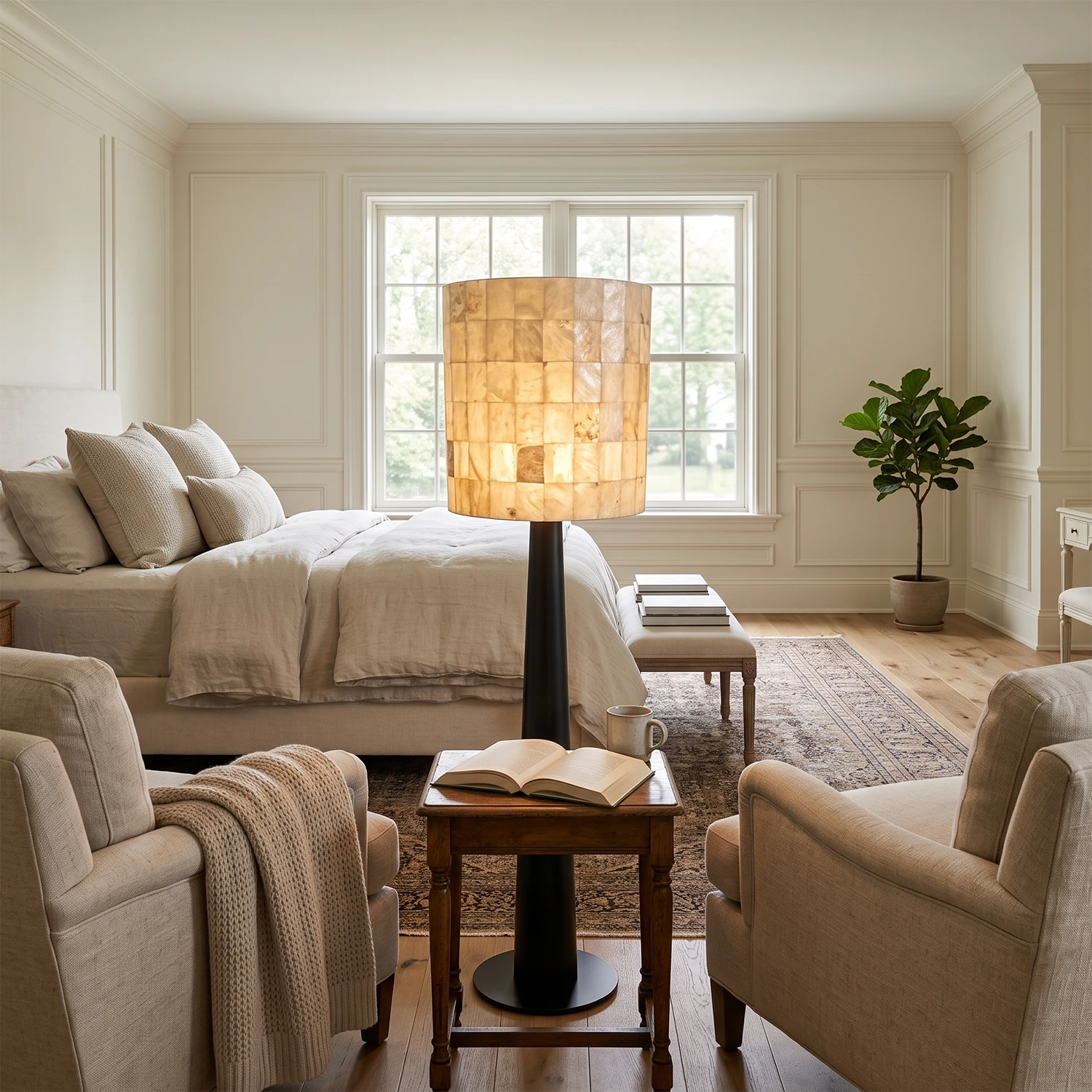
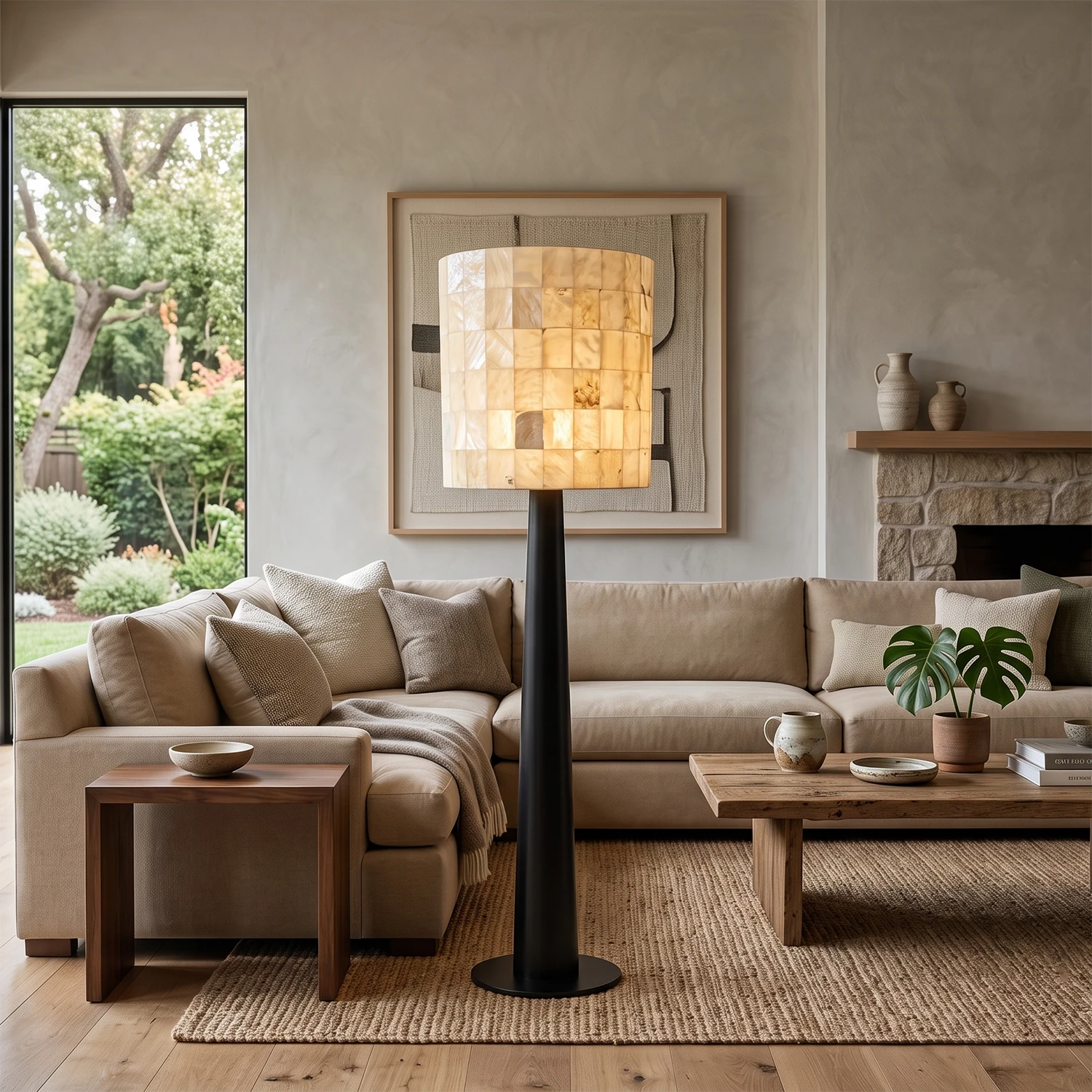
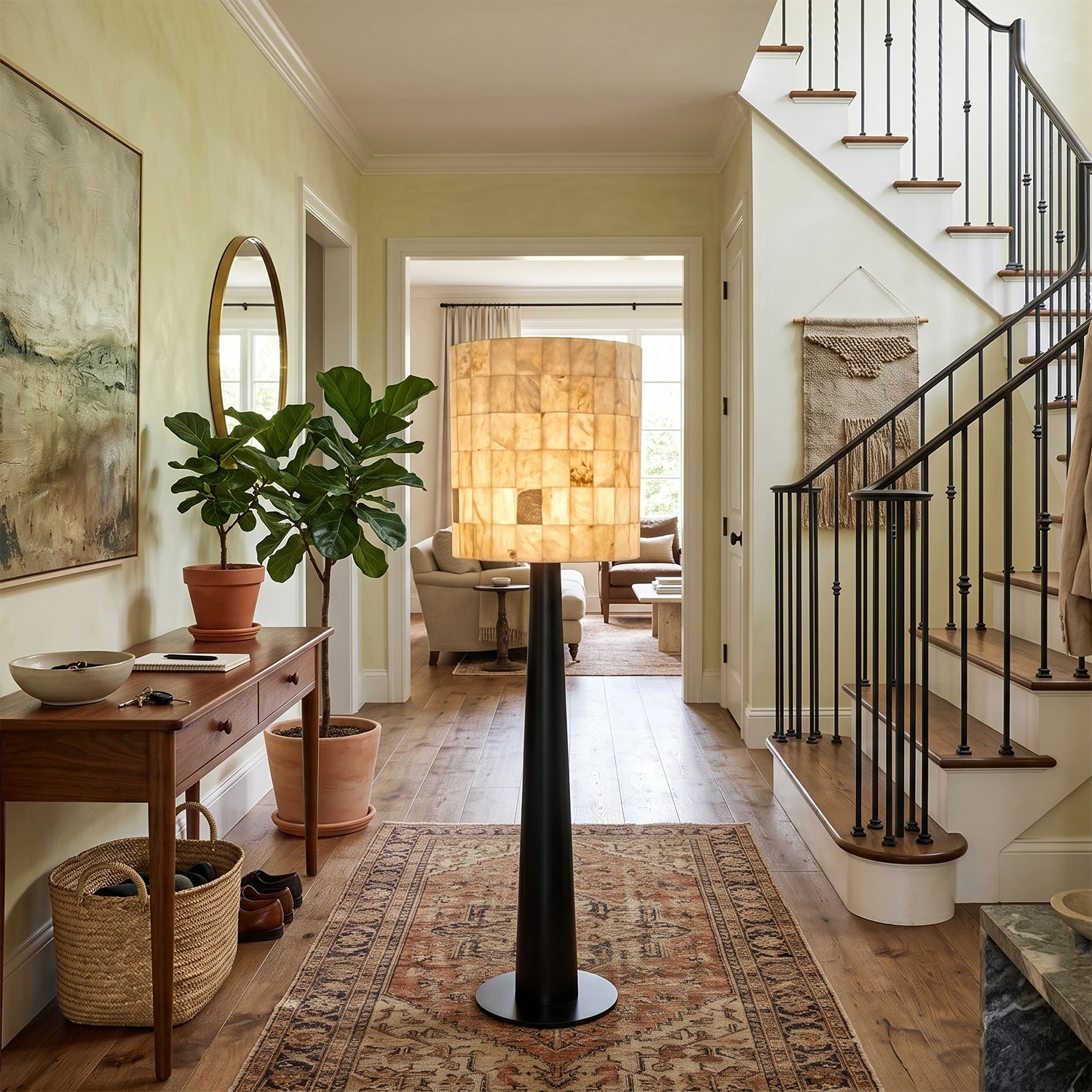
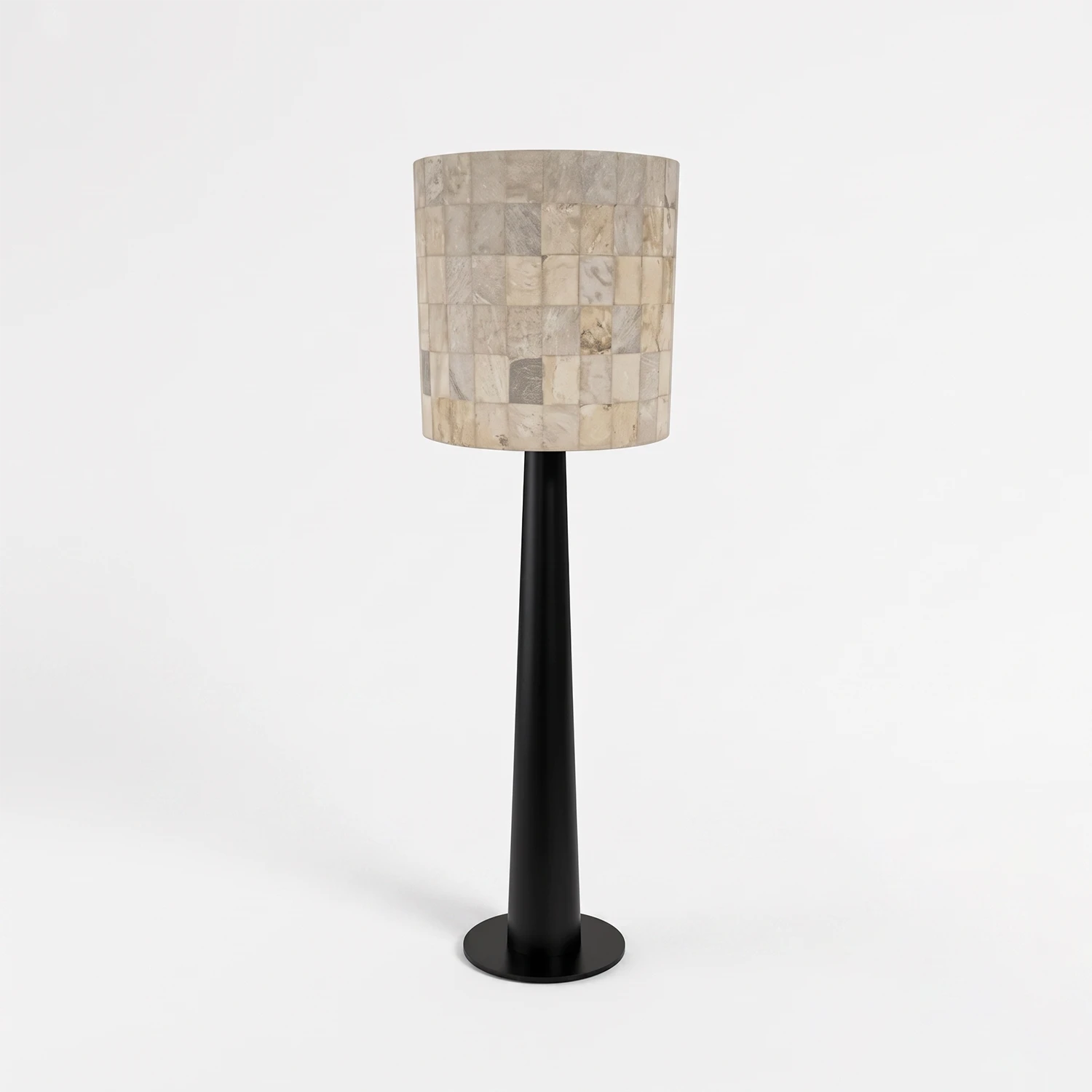
The Bryony Tiled Alabaster Floor Lamp builds its drum shade from dozens of small squares of natural alabaster, set edge to edge in a grid. Because every tile is cut from a different part of the stone, they don't light evenly — some come up pale and milky, some carry a warm amber grain, one or two glow noticeably brighter than their neighbours. The shade reads as a field of small individual panels rather than one continuous surface.
That difference is the whole reason for building a shade this way. A single large piece of alabaster gives you one gradient and one set of veins; a hundred small ones give you a hundred, and the eye keeps finding new ones. It also has a practical origin — stone this translucent is rarely found in large flawless sheets, so working in small tiles is how the material has always been used at scale, from window screens to lanterns. Beneath it, the base does the opposite job: a slim black column tapering to a wide flat disc, dark and quiet so that nothing competes with the light above it. Set beside a sofa or an armchair, it throws a soft warm glow at head height and reads as a lit object in its own right when you're across the room.
No two pieces of stone are ever the same
Alabaster is a natural stone, so every piece carries its own veining and subtle variation in color. The fixture you receive may therefore differ slightly from the images shown.

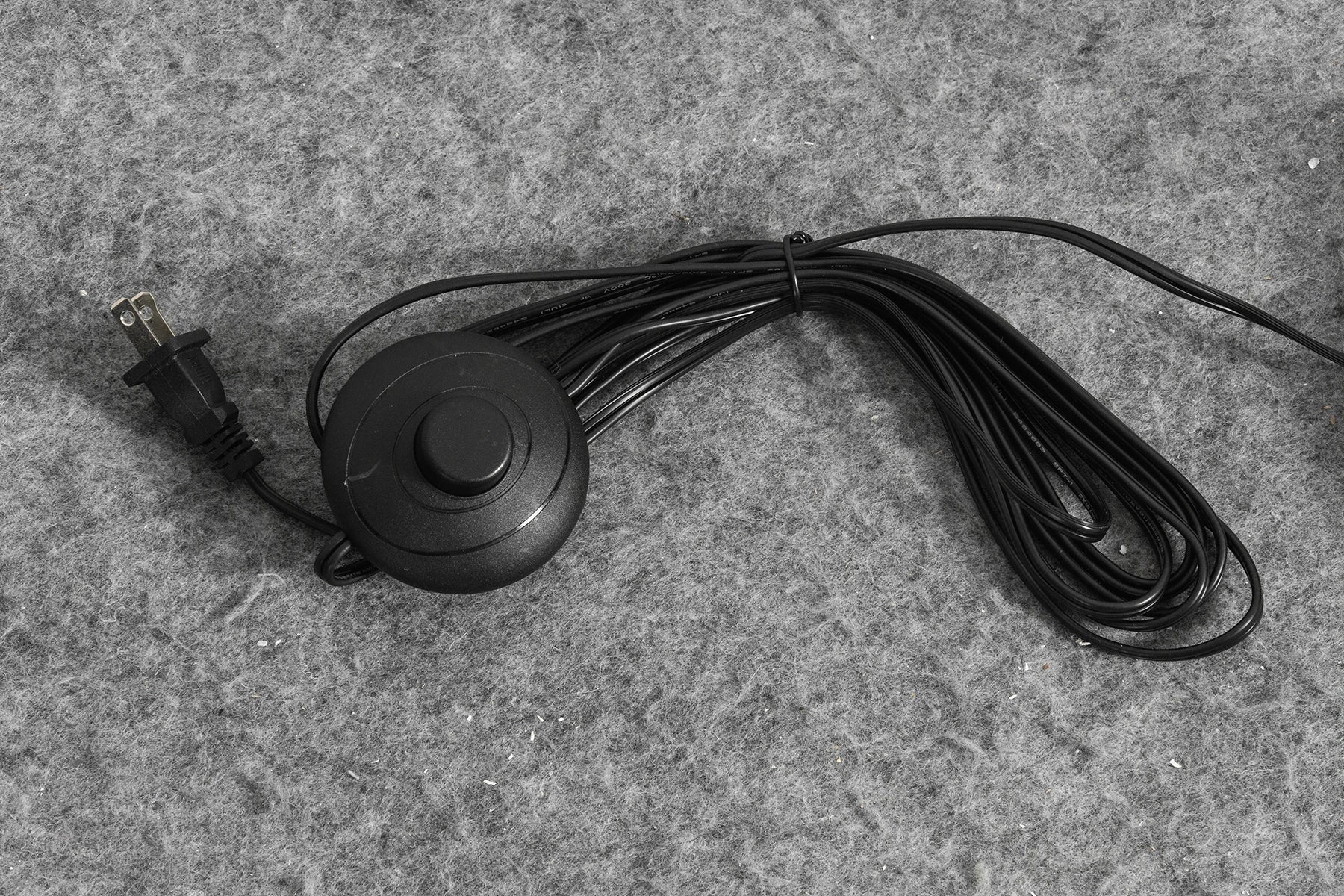
The switch sits on the cord, where your foot already is. No bending down to a socket, no reaching up into a hot shade.
On and off only. To dim it, use a dimmable bulb with a plug-in dimmer.
The shade is built from many small squares of natural stone, each cut from a different piece. So some tiles glow paler, some warmer, and one or two noticeably brighter than their neighbours — and the seams between them stay visible when the lamp is lit, forming a faint grid across the shade. Both are how a tiled stone shade is made. Neither is a fault, and no two lamps repeat the same pattern.
This is a plug-in lamp with a foot switch on the cord — no junction box, no electrician, no holes in anything. Unpack it, plug it in, and press the switch with your foot. That also means you can move it to another room, or take it with you when you move out.
Dimming depends on the bulb you fit. Put in a dimmable E26 bulb and pair it with a plug-in dimmer between the lamp and the outlet, and it dims — the foot switch alone is on and off. An ordinary bulb will not dim whatever you plug it into.
The cord is 150 cm / 59″ including the switched plug — enough to reach an outlet behind a sofa, but not across a room. Measure before you decide where the lamp goes, and if you need it longer, ask us before ordering and we'll extend it.
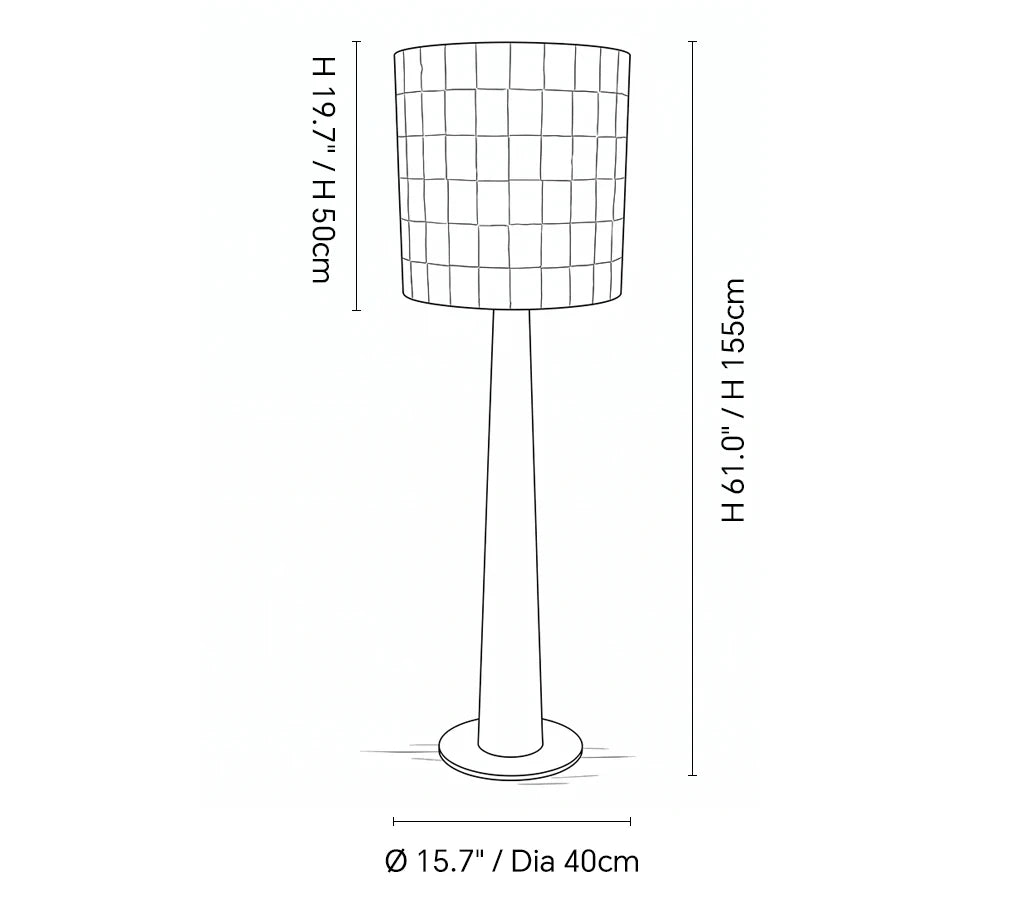
The stone drum is the same on all three — what changes is how high it stands, and that decides whether you look at the light or into it.
The right choice if you sit low and read a lot.
If you're unsure, this is the one.
Best where it stands behind or beyond the seating, not next to it.
Nobody chose which tile would glow brightest.
Translucent alabaster almost never comes out of the ground in large flawless sheets. So for as long as people have wanted light to pass through stone — in window screens, in lanterns, in altar panels — they have worked it in small pieces and set them side by side. The Bryony shade is built the same way: dozens of squares, each cut separately, each carrying a different part of the same stone.
That constraint is what makes it worth looking at. A single large panel gives you one gradient and one set of veins. A hundred small ones give you a hundred — some coming up pale and milky, some warm amber, one or two noticeably brighter than the tiles beside them. Nobody arranged that. It is simply where each piece happened to sit in the block, and it means no two of these lamps will ever glow the same way.
Everything below the shade is built to get out of the way. The column is black, slim, and tapered, narrowing as it rises so the eye slides past it; the foot is a plain flat disc doing nothing but holding the lamp steady. Dark base, lit stone — the whole design is an argument about where you should be looking. Switched off in the afternoon, the shade still holds its honey tone against a pale wall, which is more than white fabric or clear glass can say.
What the shade looks like lit, which height to pick, and how it plugs in.
Because they are real stone. The shade is made of dozens of small squares of alabaster, and each one is cut from a different piece — so some glow pale, some warm amber, and one or two brighter than the tiles next to them.
You will also see the joins between tiles when the lamp is on, like a faint grid across the shade. That is how a tiled stone shade is built. Neither of these is a fault, and it means no two of these lamps look the same.
Sit down where the lamp will stand and think about your eye level. The bottom of the shade should sit at or just above your eyes when seated — high enough that the light reaches your book, low enough that you never see under the shade into the bulb.
61″ for a low sofa or a deep armchair. 66.9″ beside a standard sofa — the safe answer in most living rooms. 71″ when the lamp stands behind the seating, or next to something tall like a high-backed chair or a bed.
Yes, but the foot switch is only on and off. To dim it you need two things: a dimmable bulb, and a plug-in dimmer that sits between the lamp's plug and the wall outlet.
Those cost very little and are sold everywhere. An ordinary bulb will not dim no matter what you plug it into — that is the most common reason people think a lamp is faulty when it isn't.
Beside a chair, yes. Stone softens light rather than blocking it, so what you get is a warm pool around the lamp with no glare and no visible bulb — easy to sit next to all evening.
What it will not do is light a whole room on its own. Treat it as the lamp beside the chair, not the ceiling light. If you want more brightness, change the bulb, not the height — all three heights use the same shade, so a taller lamp spreads the same light wider rather than giving you more of it.
A soft dry cloth on the stone, and the same on the black base. Keep water off the shade — alabaster is porous and absorbs it, leaving a mark that will not come out.
No sprays, no polish, no scouring pads. Switch it off and let the bulb cool first. Dust is easiest to catch with a dry microfibre cloth before it settles into the seams.

loading